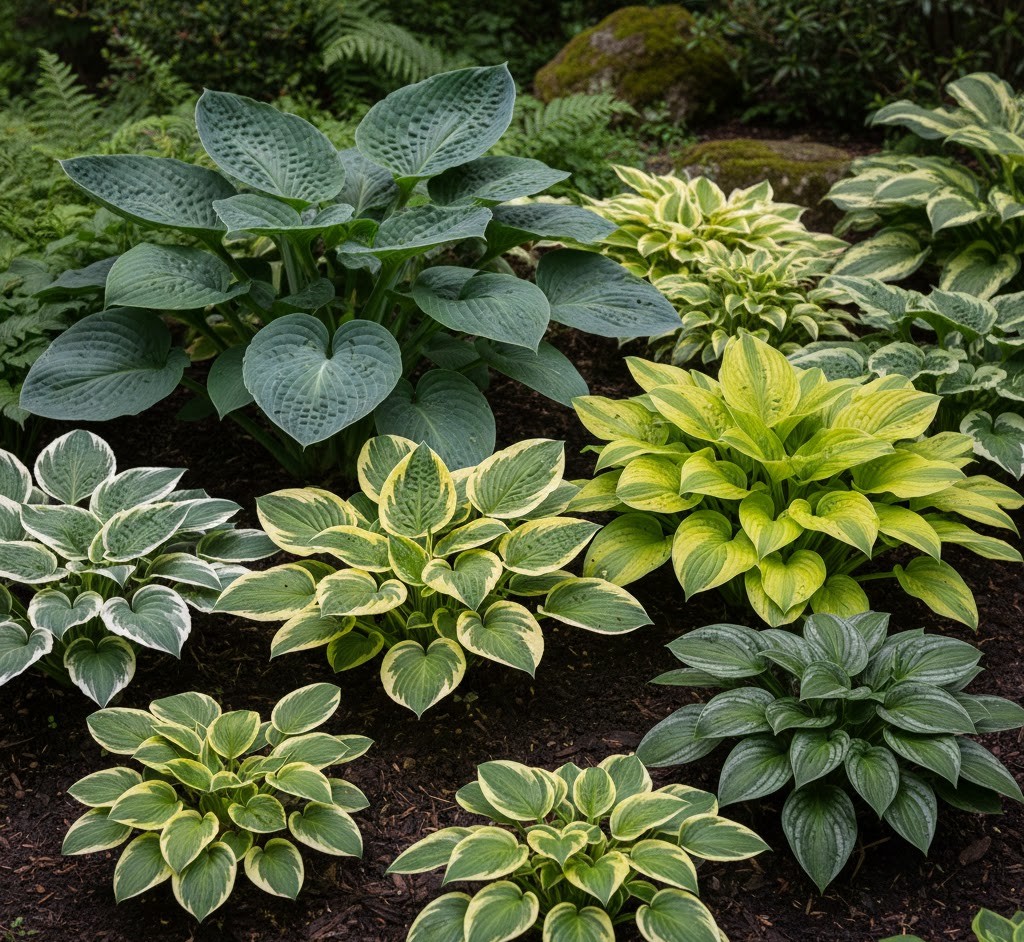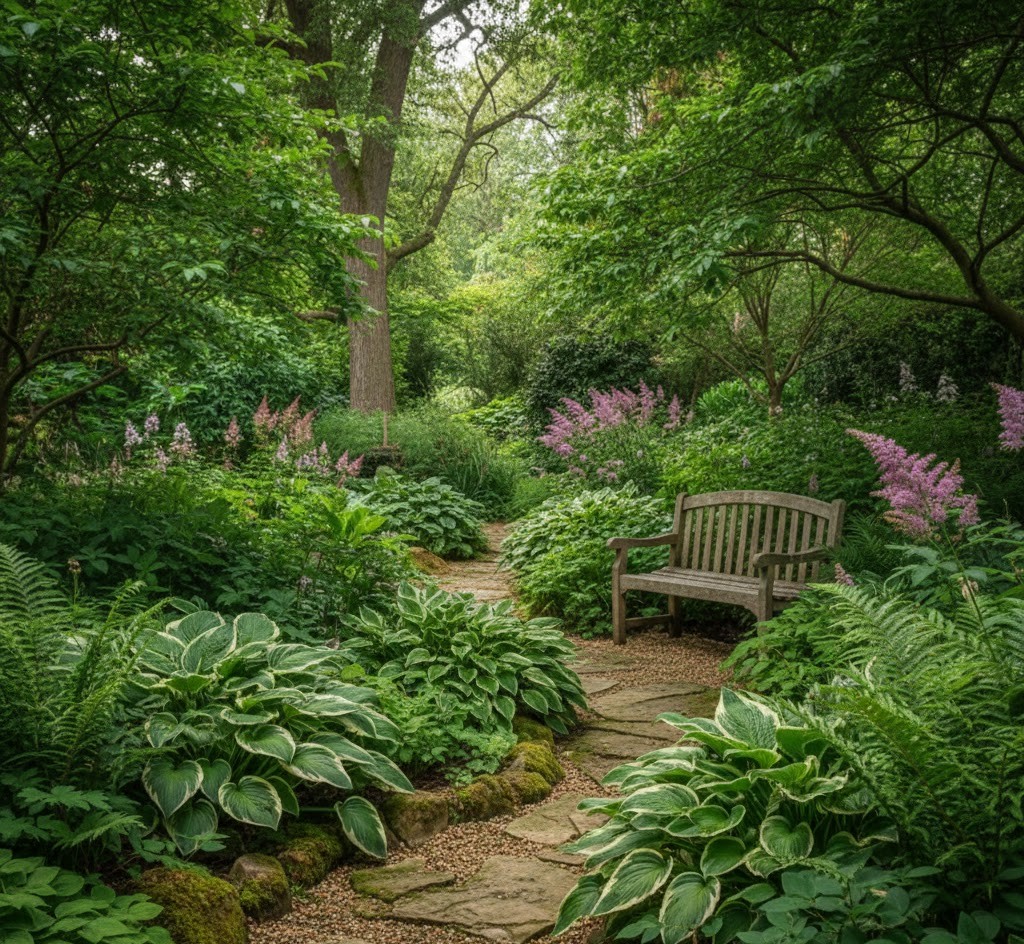
Create Harmonious Shade Garden Compositions
Effective shade garden design balances structure with natural flow. Create defined pathways and focal points while allowing plants to grow in organic, interconnected groupings.
Consider sight lines and how the garden will be viewed from different angles. Design for both close-up appreciation and distant viewing to maximize enjoyment.
Successful combinations consider growth habits, textures, and seasonal interest. Pair bold-leaved plants with fine-textured companions, and combine plants with complementary bloom times.
Group plants with similar cultural requirements together to simplify maintenance and ensure optimal growing conditions for all specimens.
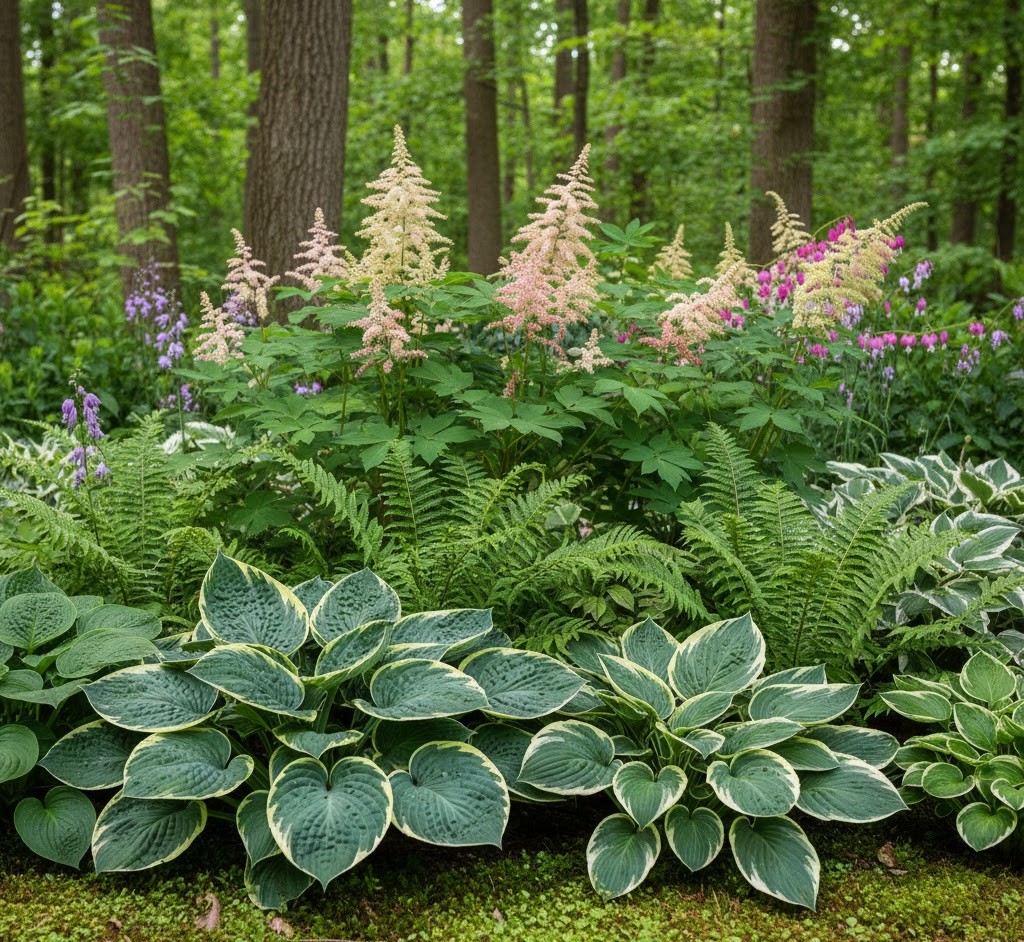
Vary leaf sizes and surface textures to create visual interest. Combine smooth, glossy leaves with rough, matte surfaces for dynamic compositions.
Use plants with different growth habits to create architectural interest. Combine mounding, upright, and spreading forms for balanced designs.
Develop cohesive color palettes using foliage and flowers. Monochromatic schemes create calm, while complementary colors add energy and contrast.
Begin by assessing your space and identifying design goals. Consider:
Develop a phased approach, starting with key structural plants and gradually adding complementary elements. This allows the garden to evolve naturally while maintaining design integrity.
We use cookies and similar technologies to enhance your browsing experience and analyze site traffic. By clicking "Accept", you consent to our use of cookies. You can learn more in our Privacy Policy.